


Why Body Acne Needs a Different Skincare Approach

Acne is often associated with the face, but breakouts on the body are just as common and often more persistent.
Body acne can affect areas such as the back, chest, shoulders, arms, and thighs, leading to discomfort, visible marks, and recurring inflammation.
Despite sharing similarities with facial acne, acne on the body behaves differently and requires a tailored skincare approach.
Many people struggle with pimples on body areas even after controlling facial acne. This happens because the skin on the body differs in thickness, oil production, friction exposure, and response to sweat and clothing.
Understanding these differences is essential for managing body pimples effectively and preventing recurrence.
This article explains why body acne behaves differently, common triggers behind acne on the body, how it differs from facial acne, and how supportive homeopathic care and lifestyle measures are commonly used as part of a comprehensive back acne treatment strategy.
Understanding Body Acne
Body acne develops when hair follicles become clogged with excess oil, dead skin cells, sweat, and bacteria. While this mechanism is similar to facial acne, the skin on the body presents additional challenges.
Key characteristics of body skin include:
-
Thicker epidermis compared to facial skin
-
Larger pores in areas like the back and chest
-
Higher exposure to friction from clothing
-
Increased sweat retention
These factors make body acne more resistant to rapid improvement and more prone to deeper, inflamed lesions.
Common Areas Affected by Body Acne
Body acne can appear in multiple regions, each influenced by different triggers.
1. Back and Shoulders
The most common site, often called back acne. Sweat retention, tight clothing, and friction play a major role here.
2. Chest
Chest acne may be influenced by hormonal fluctuations, cosmetics, or occlusive tissue.
3. Arms and Thighs
Body pimples in these areas may overlap with follicular congestion and skin sensitivity rather than classic acne alone.
Understanding location-specific triggers helps refine back acne treatment and overall body acne management.
Why Body Acne Is Different from Facial Acne
Treating body acne exactly like facial acne often leads to poor results. Several differences explain why.
-
Skin Thickness and Follicle Structure
The skin on the back and chest is thicker, which allows inflammation to develop deeper within follicles, making lesions slower to heal.
-
Sweat and Occlusion
Body areas are frequently covered, creating warm and moist environments that encourage bacterial growth.
-
Friction and Pressure
Tight clothing, backpacks, sports gear, and prolonged sitting can worsen inflammation and clog follicles.
These factors explain why eczema vs dry skin-style confusion does not apply here, and why body acne needs its own management strategy.
Common Triggers of Body Acne
Body acne is often aggravated by a combination of internal and external factors.
Common triggers include:
-
Excessive sweating without timely cleansing
-
Tight, non-breathable clothing
-
Harsh body cleansers or scrubs
-
Hormonal imbalance
-
Poor exfoliation of thick body skin
-
Stress and disrupted sleep
Identifying and minimizing personal triggers is key to long-term control of acne on body.
How Homeopathy Treats Body Acne
From a homeopathic perspective, acne is not viewed solely as a surface skin issue. Body acne is considered a manifestation of internal imbalance involving detoxification, circulation, immune response, and skin regeneration.
Homeopathy emphasizes:
-
Supporting the body’s natural elimination processes
-
Improving skin resistance to inflammation
-
Addressing recurrent and widespread breakouts
-
Avoiding aggressive suppression of lesions
Remedy selection is guided by the distribution, appearance, and recurrence pattern of pimples rather than acne alone.
Homeopathic Support for Body Acne
Homeopathic support is commonly used as part of a holistic approach to managing body pimples, especially when breakouts are widespread, recurrent, or resistant to topical care alone.
Goals of Homeopathic Support
-
Reduce the inflammatory tendency of the skin
-
Support healthy healing and reduce marks
-
Improve circulation and tissue repair
-
Enhance skin clarity over time
Consistency and lifestyle discipline play a critical role in outcomes.
Homeopathic Remedies Commonly Used in Body Acne Support
The following remedies are traditionally referenced in homeopathic practice for acne-prone and inflamed skin. They are selected based on skin response and distribution patterns.
1. Berberis Aquifolium
Traditionally associated with supporting skin clarity and addressing dry,rough & scaly skin. Often referenced when body acne leaves marks or pigmentation.
2. Thuja Occidentalis
Commonly considered in cases of persistent or recurrent acne with deeper lesions. It is often discussed when breakouts do not resolve easily.
3. Echinacea Angustifolia
Traditionally linked with immune modulation and resistance to infection. It is often referenced when acne appears inflamed or slow to heal.
4. Hamamelis Virginica
Associated with circulatory support and soothing inflamed skin. Often considered when lesions are inflamed or sore.
5. Curcuma Longa
Traditionally referenced for inflammatory skin tendencies. It is often included when acne shows redness and irritation.
6. Hydrastis Canadensis
Commonly discussed in chronic skin conditions with poor healing or delayed skin response.
7. Thiosinaminum
Traditionally associated with scar modulation and tissue remodeling. Often referenced when acne leaves residual marks.
These remedies are commonly used in combination formulations under professional guidance.
Best Homeopathic Medicine for Body Acne
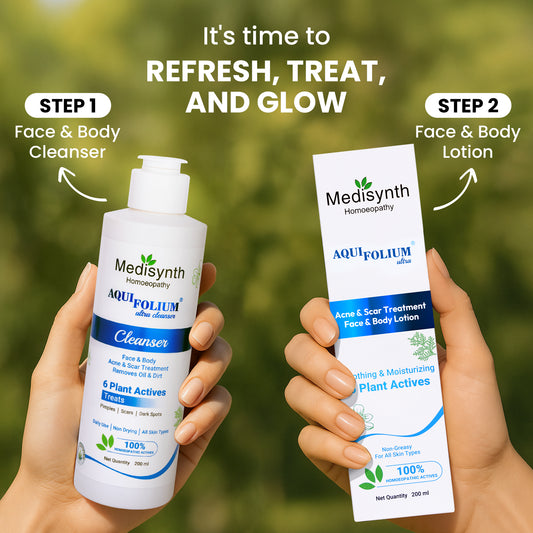
Aquifolium Ultra
Aquifolium Ultra is a homeopathic formulation developed to support acne-prone skin, including widespread and recurrent body acne. It is designed to address internal factors contributing to inflammation, pigmentation, and delayed healing.
-
Helps manage inflammatory skin tendencies
-
Supports clearer skin over time
-
Assists in reducing acne marks
-
Suitable for long-term supportive use under guidance
Aquifolium Ultra is commonly considered as part of a holistic back acne treatment plan rather than a standalone solution.
Lifestyle Tips for Managing Body Acne
Lifestyle habits play a decisive role in controlling body acne. Because body skin is exposed to sweat, friction, and occlusion daily, small routine changes can significantly reduce breakouts.
Clothing Choices Matter
-
Prefer loose, breathable fabrics such as cotton
-
Avoid synthetic or tight clothing that traps sweat
-
Change out of sweaty clothes promptly after exercise
Friction and trapped moisture are among the most common triggers of body pimples.
Showering and Cleansing Habits
-
Shower soon after sweating or physical activity
-
Use gentle, non-comedogenic body cleansers
-
Avoid harsh scrubbing tools that irritate follicles
-
Pat the skin dry instead of rubbing
Over-cleansing can worsen inflammation, while gentle consistency supports healing.
Hair and Body Product Awareness
Hair products can run down the back and shoulders, clogging pores.
Helpful practices include:
-
Rinsing conditioner thoroughly
-
Keeping hair off the back when possible
-
Avoiding oily or heavily fragranced body products
This step alone often reduces upper-back acne significantly.
Bedding, Towels, and Hygiene
-
Change bedsheets regularly, especially pillowcases
-
Use clean towels and avoid sharing them
-
Wash workout clothing after each use
Clean contact surfaces reduce bacterial exposure to acne-prone skin.
Diet, Hydration, and Internal Balance
While diet does not directly cause acne, it influences inflammation and healing.
Supportive habits include:
-
Staying well hydrated
-
Limiting excessive processed foods
-
Maintaining regular meal timings
-
Supporting digestion and sleep quality
Internal balance supports skin resilience and reduces flare frequency.
Stress and Recovery
Stress can influence hormonal balance and inflammatory response.
Supportive practices include:
-
Adequate sleep
-
Stress-reduction techniques
-
Avoiding overtraining without recovery
A balanced routine helps reduce chronic flare-ups of acne on body.
Conclusion
Body acne behaves differently from facial acne due to thicker skin, deeper follicles, sweat retention, and friction.
Treating body acne effectively requires a distinct skincare and lifestyle approach rather than simply extending facial routines to the body.
A holistic strategy that combines supportive homeopathic remedies such as Medisynth’s Aquifolium Ultra and disciplined lifestyle practices offers a structured pathway for managing pimples on body, reducing recurrence, and improving long-term skin clarity.
References:
-
Boericke’s Materia Medica
Featured Collection


- MRP: ₹ 374.00 (Incl. of all taxes)
-
₹ - MRP: ₹ 374.00 (Incl. of all taxes)
- Unit price
- per
- MRP: ₹ 374.00 (Incl. of all taxes)
-
₹ - MRP: ₹ 374.00 (Incl. of all taxes)
- Unit price
- per


- MRP: ₹ 374.00 (Incl. of all taxes)
-
₹ 0.00 - MRP: ₹ 374.00 (Incl. of all taxes)
- Unit price
- per
- MRP: ₹ 374.00 (Incl. of all taxes)
-
₹ 0.00 - MRP: ₹ 374.00 (Incl. of all taxes)
- Unit price
- per


- MRP: ₹ 418.00 (Incl. of all taxes)
-
₹ - MRP: ₹ 418.00 (Incl. of all taxes)
- Unit price
- per
- MRP: ₹ 418.00 (Incl. of all taxes)
-
₹ - MRP: ₹ 418.00 (Incl. of all taxes)
- Unit price
- per

- MRP: ₹ 748.00 (Incl. of all taxes)
-
₹ 0.00 - MRP: ₹ 748.00 (Incl. of all taxes)
- Unit price
- per
- MRP: ₹ 748.00 (Incl. of all taxes)
-
₹ 0.00 - MRP: ₹ 748.00 (Incl. of all taxes)
- Unit price
- per

- MRP: ₹ 973.00 (Incl. of all taxes)
-
₹ - MRP: ₹ 973.00 (Incl. of all taxes)
- Unit price
- per
- MRP: ₹ 973.00 (Incl. of all taxes)
-
₹ - MRP: ₹ 973.00 (Incl. of all taxes)
- Unit price
- per