


What Is the Best Homeopathic Medicine for Fungal Infection That Keeps Coming Back?

Fungal infections are one of the most common skin problems, yet they are also among the most frustrating. The itching settles, the redness fades, and the skin starts looking normal again. Then a few weeks later, the same patch reappears in the same area. After the third or fourth recurrence, most people stop asking how to get rid of the infection and start asking why it keeps returning in the first place.
This recurring cycle is common because fungal infections are often linked to everyday conditions that are difficult to avoid.
Heat, humidity, sweating, tight clothing, damp footwear, and moisture trapped in skin folds can all create an environment where fungi continue to thrive. This is especially true during summer and monsoon months when the skin remains exposed to warmth and moisture for extended periods.
People looking for a homeopathic medicine for fungal infection are often not searching for a quick fix. They are looking for a practical way to manage recurring skin problems while reducing the chances of the infection returning again and again.
Understanding why fungal infections recur is the first step toward dealing with them more effectively.
Why Do Fungal Infections Keep Coming Back?
Most recurring fungal infections are not caused by poor hygiene. They are caused by moisture. If the skin stays warm and damp long enough, fungi get the environment they need to grow.
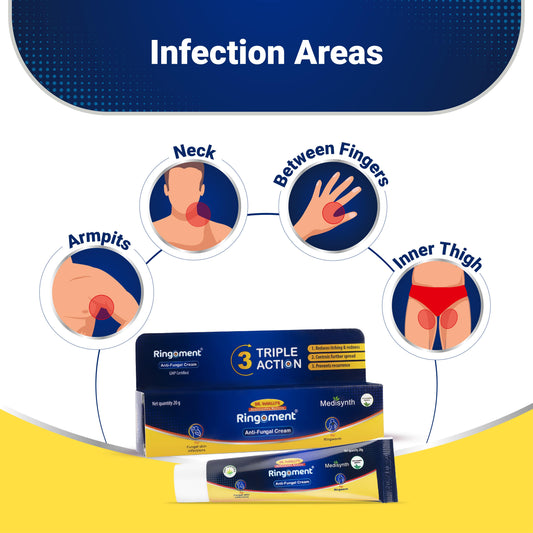
This is why fungal infections commonly affect areas such as the groin, inner thighs, underarms, feet, and skin folds. These parts of the body naturally trap heat and moisture, making them more vulnerable to fungal growth.
The most common reasons fungal infections keep coming back are:
- The skin remains damp for long periods after sweating
- Tight clothing traps heat and moisture
- Shoes and socks stay damp throughout the day
- Towels are reused before drying properly
- Treatment is stopped as soon as symptoms improve
- The same environmental triggers remain unchanged
- Moisture-prone areas do not get enough airflow
For many people, the infection is not returning because the previous treatment failed. It is returning because the conditions that encouraged the infection are still present.
Common Signs of a Recurring Fungal Infection
Recurring fungal infections often begin with symptoms that feel familiar. Many people notice the same itching, irritation, or skin changes appearing in exactly the same location as before.
Common signs include:
- Persistent itching
- Red or inflamed patches
- Circular or ring-shaped lesions
- Dry or flaky skin
- Burning sensations
- Skin discoloration after healing
- Repeated irritation in the same area
The itching often becomes worse after sweating, exercising, or spending time outdoors in hot weather.
In some cases, the affected area may appear to improve temporarily before symptoms gradually return.
Recognizing these signs early may help prevent the infection from becoming more widespread.
Fungal Infection Treatment at Home
Many people search for fungal infection treatment at home because they want practical steps they can take immediately. While home care may not replace professional treatment, certain habits can make a noticeable difference.
1. Dry the Skin Completely
Many people dry the visible parts of the body after bathing but pay less attention to areas such as the groin, toes, underarms, and skin folds. Even small amounts of trapped moisture can create favorable conditions for fungal growth.
2. Don't Stay in Gym Clothes
One of the most common mistakes is remaining in sweaty workout clothes long after exercise has ended. Heat and moisture trapped against the skin create an environment where fungal infections are more likely to recur.
Also, make sure to take a bath after gym so as to make sure that the chances of catching a fungal infection from someone else become minimal.
3. Rotate Footwear
Wearing the same shoes every day may prevent them from drying completely. Allowing footwear to air out between uses can help reduce excess moisture.
4. Choose Breathable Fabrics
Loose-fitting cotton clothing generally allows better airflow than tight synthetic fabrics. This helps reduce sweating and moisture buildup.
5. Avoid Sharing Personal Items
Towels, socks, clothing, and footwear may contribute to the spread of fungal organisms. Personal items should not be shared whenever possible.
6. Maintain Good Hygiene
Regular bathing, proper drying of the skin, and changing clothes after excessive sweating remain some of the simplest ways to reduce fungal growth.
When people ask how to cure fungal infection on skin naturally at home, these practical measures are often the first place to start.
Key Homeopathic Remedies to Treat Fungal Infection
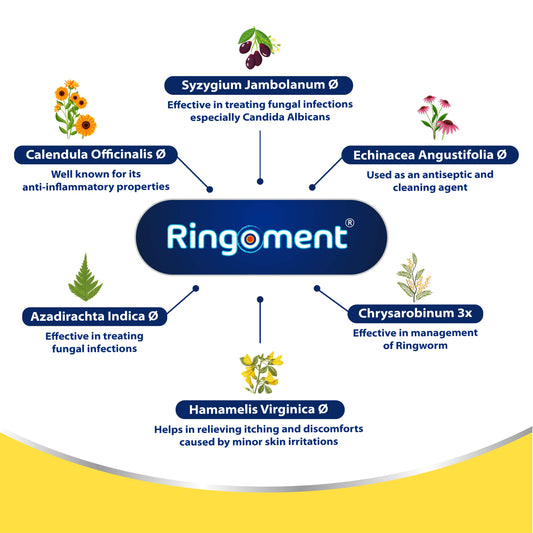
1. Syzygium Jambolanum
Syzygium Jambolanum is commonly included in homeopathic skin formulations intended for recurring skin concerns. It is often used in products designed for irritation-prone areas where skin discomfort tends to return repeatedly.
2. Calendula Officinalis
Repeated fungal infections often leave the skin irritated from scratching and friction. Calendula, acting as a homoeopathic antiseptic, is one of the best-known ingredients in homoeopathic skin-care formulations and is frequently included in products intended for irritated and repeatedly affected skin.
3. Hamamelis Virginica
Hamamelis Virginica is widely used in topical skin-care formulations. It is commonly included in products designed for skin that experiences recurring irritation and environmental stress.
4. Echinacea Angustifolia
Echinacea Angustifolia is often included in skin-support formulations because it is traditionally associated with maintaining healthy skin and supporting skin resilience during recurring skin problems.
5. Azadirachta Indica
Neem has been used in skin-care traditions for generations. Its inclusion in fungal skin formulations makes practical sense because fungal infections are often accompanied by itching, redness, and recurring irritation.
6. Chrysarobinum
Chrysarobinum is commonly included in formulations intended for persistent skin concerns. It is particularly relevant in recurring conditions, like ringworm with violent itching after skin concerns, where the same area becomes affected repeatedly.
What Is the Best Homeopathic Medicine for Fungal Infection?
When fungal infections keep coming back, people often make the mistake of switching from one product to another every few weeks. The result is usually the same: temporary improvement followed by another flare-up.
The search for the best homeopathic medicine for fungal infection often comes down to finding a product specifically designed for fungal skin concerns instead of using general-purpose skin creams.
For recurring fungal infections, targeted topical formulations are often preferred because they can be applied directly to the affected area as part of a consistent skin-care routine.
Ringoment Antifungal Cream by Medisynth
Ringoment Antifungal Cream is formulated specifically for fungal skin conditions and recurring irritation-prone areas.
Instead of relying on a single ingredient, this formulation combines six homeopathic ingredients mentioned above that are commonly used in skin-care products intended for fungal concerns.
Why Does This Formulation Work?
One of the challenges with recurring fungal infections is that they often involve more than itching alone. Repeated irritation may affect skin appearance, skin comfort, and overall confidence.
Ringoment combines ingredients commonly used in homeopathic skin-care formulations. Rather than focusing on a single aspect of fungal skin discomfort, the formulation brings together ingredients associated with recurring skin concerns, irritation-prone skin, and ongoing skin maintenance.
For individuals looking for a homeopathic medicine for fungal infection on skin, a dedicated antifungal formulation can become part of a broader skin-care routine focused on managing recurrence.
Ringoment should be considered by individuals experiencing:
- Recurring fungal skin infections
- Itching in moisture-prone areas
- Repeated fungal irritation during summer or monsoon
- Skin discomfort associated with fungal concerns
- Frequent flare-ups in the same location
Conclusion
Recurring fungal infections are frustrating because they often return just when the skin starts feeling normal again.
In many cases, the challenge is not simply making the itching disappear but preventing the same infection from returning repeatedly.
The goal is not simply to make the symptoms disappear for a few days. The goal is to create conditions where the infection is less likely to return again and again.
Combining good hygiene practices, moisture control, preventive habits, and a targeted homeopathic medicine for fungal infection may help individuals manage recurring fungal skin concerns more effectively over time.
FAQs
1. What is the best homeopathic medicine for fungal infection?
The best homeopathic medicine for fungal infection depends on the individual condition and severity. Products specifically formulated for fungal skin concerns, such as Ringoment Antifungal Cream, are commonly considered.
2. Why does fungal infection keep coming back?
Fungal infections often return because moisture, sweating, humidity, and other environmental conditions remain unchanged even after symptoms improve.
3. Can sweating worsen fungal infections?
Yes. Excessive sweating creates warm and moist conditions that encourage fungal growth.
4. What are some measures to treat fungal infection at home?
Keeping the skin dry, changing sweaty clothes promptly, wearing breathable fabrics, and maintaining proper hygiene are among the most common home-care measures.
5. Can fungal infections spread to other areas?
Yes. Scratching, shared personal items, and direct contact may contribute to the spread of fungal organisms.
6. How can I reduce the chances of fungal infection returning?
Reducing moisture buildup, maintaining good hygiene, wearing breathable clothing, and following a consistent skin-care routine can help reduce recurrence.
References:
- Why Am I Prone to Fungal Infections?
- Antibacterial and antifungal activity of Syzygium jambolanum seeds - ScienceDirect
- The synergistic effect of calendula officinalis and echinacea angustifolia on candida albicans in-vitro - University of Johannesburg
- Fungal Skin Problems: Everyday Habits to Prevent Infections Naturally
- Fungal Infection (Mycosis): Types, Causes & Treatments
- Boericke's Materia Medica
Featured Collection


- MRP: ₹ 194.00 (Incl. of all taxes)
-
₹ 200.00 - MRP: ₹ 194.00 (Incl. of all taxes)
- Unit price
- per
- MRP: ₹ 194.00 (Incl. of all taxes)
-
₹ 200.00 - MRP: ₹ 194.00 (Incl. of all taxes)
- Unit price
- per
- MRP: ₹ 206.00 (Incl. of all taxes)
-
₹ - MRP: ₹ 206.00 (Incl. of all taxes)
- Unit price
- per
- MRP: ₹ 206.00 (Incl. of all taxes)
-
₹ - MRP: ₹ 206.00 (Incl. of all taxes)
- Unit price
- per


- MRP: ₹ 374.00 (Incl. of all taxes)
-
₹ - MRP: ₹ 374.00 (Incl. of all taxes)
- Unit price
- per
- MRP: ₹ 374.00 (Incl. of all taxes)
-
₹ - MRP: ₹ 374.00 (Incl. of all taxes)
- Unit price
- per
- MRP: ₹ 200.00 (Incl. of all taxes)
-
₹ - MRP: ₹ 200.00 (Incl. of all taxes)
- Unit price
- per
- MRP: ₹ 200.00 (Incl. of all taxes)
-
₹ - MRP: ₹ 200.00 (Incl. of all taxes)
- Unit price
- per
- MRP: ₹ 160.00 (Incl. of all taxes)
-
₹ - MRP: ₹ 160.00 (Incl. of all taxes)
- Unit price
- per
- MRP: ₹ 160.00 (Incl. of all taxes)
-
₹ - MRP: ₹ 160.00 (Incl. of all taxes)
- Unit price
- per