


Ringworm In Summer: Tips And Homeopathic Remedies To Treat It

Ringworm is a superficial fungal infection that commonly affects the skin during warm and humid conditions.
The prevalence of this infection increases significantly during summer due to excessive sweating, higher environmental humidity, and prolonged skin moisture.
These conditions create an ideal environment for dermatophytes, the fungi responsible for ringworm, to grow and spread.
Despite its name, ringworm is not caused by a worm. It is a contagious fungal infection that affects the outer layer of the skin and can spread through direct contact, contaminated surfaces, or shared personal items.
The infection typically presents as circular, red, scaly patches with defined borders and may progressively expand if not managed effectively.
Managing Ringworm In Summer requires a combination of hygiene control, environmental awareness, and consistent topical treatment.
Understanding the underlying causes, symptoms, and treatment approaches is essential for effective management and prevention.
What is Ringworm?
Ringworm, also known as tinea, is a dermatophyte infection that affects keratin-rich tissues such as skin, hair, and nails.
The fungi responsible for this condition thrive on keratin and colonize the superficial layers of the skin.
The infection is categorized based on the affected area:
- Tinea corporis: affects the body
- Tinea pedis: affects the feet
- Tinea cruris: affects the groin
- Tinea capitis: affects the scalp
Ringworm spreads through:
- Direct skin-to-skin contact with an infected person
- Contact with contaminated objects such as towels, clothing, or bedding
- Exposure to infected surfaces in gyms, pools, or locker rooms
- Contact with infected animals
The infection can persist or worsen if the conditions supporting fungal growth remain unchanged.
Why Ringworm Increases in Summer
Summer conditions significantly accelerate fungal growth and transmission.
1. Increased sweating
Excess sweat accumulates in areas such as the groin, underarms, and feet, creating a moist environment that supports fungal proliferation.
2. High humidity levels
Humidity slows down evaporation of sweat, prolonging skin dampness and increasing susceptibility to infection.
3. Occlusive clothing
Tight or synthetic fabrics trap heat and moisture, reducing air circulation and promoting fungal growth.
4. Frequent outdoor exposure
Activities such as sports, travel, and use of shared facilities increase the risk of exposure to fungal organisms.
5. Compromised skin barrier
Continuous sweating and friction can weaken the skin barrier, making it easier for fungi to invade.
These factors collectively contribute to the increased incidence of Ringworm In Summer.
Common Symptoms of Ringworm
The clinical presentation of ringworm may vary depending on the affected area and the severity of infection.
Typical features include:
- Circular or ring-shaped lesions with clear centers
- Red, inflamed, or scaly borders
- Persistent itching or burning sensation
- Gradual expansion of the affected area
- Dry, cracked, or peeling skin
In some cases, multiple lesions may merge, leading to larger areas of infection. Early identification is important to prevent spread and complications.
Ring Worm Infection Treatment: Follow these tips
Effective ring worm infection treatment focuses on controlling fungal growth, relieving symptoms, and preventing recurrence.
1. Maintain skin hygiene
Regular cleansing helps remove sweat, debris, and fungal spores from the skin surface.
2. Keep affected areas dry
Drying the skin thoroughly, especially in folds, reduces fungal survival.
3. Avoid cross-contamination
Personal items such as towels, clothing, and bedding should be used individually and washed regularly.
4. Use appropriate topical formulations
Applying an antifungal cream for ringworm helps target fungal growth directly and supports skin recovery.
5. Continue treatment consistently
Even after symptoms improve, continued application is necessary to prevent recurrence.
A combination of hygiene and topical care is essential for effective management.
How to Cure Ringworm Fast
Although fungal infections require time to resolve, certain practices can accelerate recovery.
1. Early intervention
Starting treatment at the first sign of infection helps limit the spread and severity.
2. Maintain dryness
Fungi thrive in moisture, so keeping the area dry is critical.
3. Avoid irritation
Scratching can damage the skin and spread infection to nearby areas.
4. Regular application of treatment
Consistent use of ringworm treatment cream ensures continuous control of fungal growth.
5. Support skin environment
Wearing breathable clothing and maintaining hygiene reduces favorable conditions for fungi.
Faster recovery depends on consistent and disciplined management rather than quick fixes.
Role of Topical Creams in Ringworm Treatment
Topical formulations are the primary method of managing superficial fungal infections.
1. Direct antifungal action
Creams act on the skin surface where fungi reside, helping control their growth.
2. Symptom relief
They help reduce itching, redness, and irritation associated with infection.
3. Prevention of spread
Regular application helps limit the expansion of fungal lesions.
4. Restoration of skin condition
Topical care helps normalize affected skin over time.
Using a ringworm treatment cream consistently is essential for both symptom control and infection management.
Homeopathic Approach to Ringworm Treatment
Homeopathy focuses on supporting the body’s natural ability to maintain skin balance while addressing fungal infections.
Instead of aggressive suppression, it aims to create conditions that are unfavorable for fungal persistence.
A homeopathic antifungal cream is formulated with ingredients traditionally associated with:
- maintaining skin integrity
- supporting local defense mechanisms
- reducing irritation and discomfort
- promoting a healthier skin environment
This approach is particularly useful in cases where gentle and sustained care is preferred.
Key Homeopathic Remedies for Ringworm
Homeopathic formulations for fungal infections typically combine remedies selected for their complementary roles.
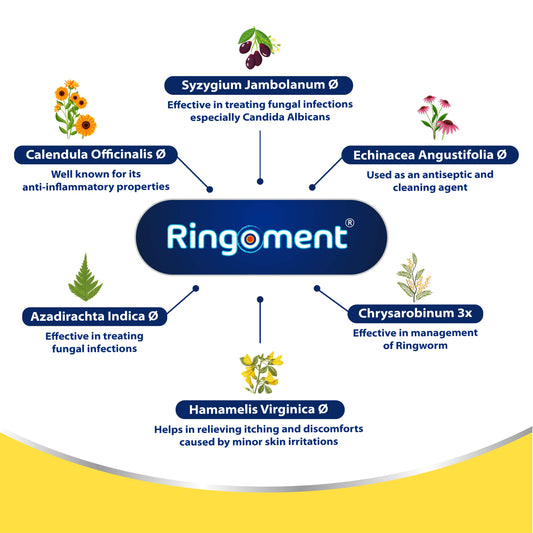
1. Syzygium Jambolanum
Traditionally associated with skin balance and microbial control, helping manage irritation and infection tendencies.
2. Calendula Officinalis
Known for its soothing properties, it supports skin repair and reduces inflammation.
3. Hamamelis Virginica
Provides a mild astringent action, helping cleanse the skin and inflammation.
4. Echinacea Angustifolia
Supports local skin defense mechanisms and contributes to maintaining a healthy skin response.
5. Azadirachta Indica
Commonly known as neem, it is valued for its purifying and skin-supportive properties.
6. Chrysarobinum
Traditionally used in scaly and chronic skin conditions, supporting the normalization of skin texture.
Together, these remedies form the basis of many of the best medicine for ringworm formulations.
Best Homeopathic Antifungal Cream for Ringworm
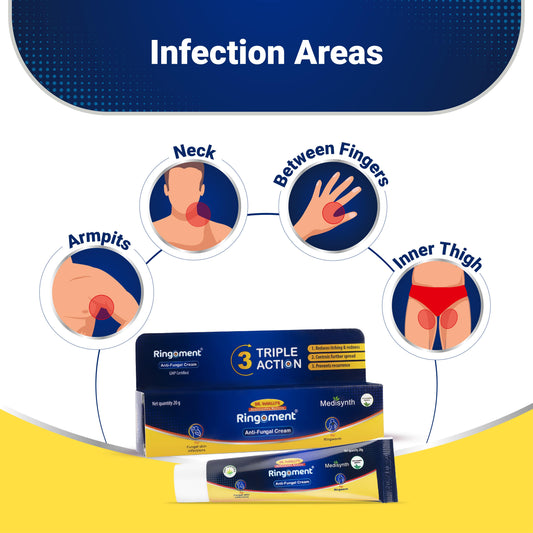
Medisynth Ringoment Anti-Fungal Cream
Medisynth Ringoment is a homeopathic topical formulation designed for managing ringworm and other fungal skin infections.
It provides localized support and helps manage symptoms associated with fungal growth.
Ringoment’s Key ingredients:
- Syzygium Jambolanum
- Calendula Officinalis
- Hamamelis Virginica
- Echinacea Angustifolia
- Azadirachta Indica
- Chrysarobinum
These ingredients are combined to support skin health and help manage fungal infections effectively.
Key benefits:
- Helps control fungal growth on the skin
- Reduces itching, irritation, and redness
- Supports restoration of normal skin condition
- Helps prevent the spread of infection
Because of its balanced formulation, it is considered a reliable ringworm treatment cream for regular use.
Tips to Prevent Ringworm in Summer
Preventive care is essential to reduce recurrence, especially during high-risk seasons.
1. Maintain dryness
Ensure skin folds remain dry, especially after bathing or sweating.
2. Wear breathable fabrics
Cotton clothing allows better air circulation and reduces moisture retention.
3. Practice personal hygiene
Regular bathing and proper drying help control fungal exposure.
4. Avoid sharing personal items
Items like towels and clothing can act as carriers for infection.
5. Change clothes frequently
Sweat-soaked clothes should be replaced promptly.
6. Maintain clean surroundings
Regular cleaning of frequently used surfaces reduces the risk of contamination.
These measures help minimize the risk of Ringworm In Summer.
Conclusion
Ringworm is a common fungal infection that becomes more prevalent during summer due to environmental conditions that favor fungal growth.
While it is generally manageable, neglecting early signs can lead to spread and prolonged discomfort.
Understanding ring worm infection treatment involves maintaining hygiene, controlling moisture, and using appropriate topical care consistently.
Early intervention and proper care play a crucial role in effective management.
Homeopathic formulations offer a gentle and supportive approach by combining ingredients traditionally associated with skin health and fungal control.
Medisynth’s Ringoment provides localized support and helps maintain skin balance.
With consistent care, proper hygiene, and preventive measures, ringworm can be effectively managed, ensuring better skin comfort during the summer months.
FAQs
1. What causes ringworm in summer?
Heat, humidity, and sweating create conditions that promote fungal growth on the skin.
2. How to cure ringworm fast?
Early treatment, maintaining dryness, and regular use of a ringworm treatment cream help improve recovery.
3. What is the best medicine for ringworm?
Topical formulations that help control fungal growth and support skin recovery are commonly used.
4. Can an antifungal cream for ringworm be used daily?
Yes, consistent application is important for effective management.
5. Is ringworm contagious?
Yes, it can spread through direct contact or shared personal items.
6. What are the common ringworm treatment cream uses?
They help reduce itching, control infection, and support skin recovery.
7. Can ringworm recur?
Yes, recurrence is possible if preventive measures are not followed.
References:
- Ringworm (Tinea Corporis): What It Looks Like, Causes & …
- Summers and Fungal Infections
- Ringworm Relief: The Ultimate Guide To Homeopathic Solutions
- Treatment of Ringworm
- Ringworm (দাদ): Causes, Symptoms & Best Homeopathic Treatment
- 6 Possible Treatments to Get Rid of Ringworm
Featured Collection


- MRP: ₹ 194.00 (Incl. of all taxes)
-
₹ 200.00 - MRP: ₹ 194.00 (Incl. of all taxes)
- Unit price
- per
- MRP: ₹ 194.00 (Incl. of all taxes)
-
₹ 200.00 - MRP: ₹ 194.00 (Incl. of all taxes)
- Unit price
- per
- MRP: ₹ 206.00 (Incl. of all taxes)
-
₹ - MRP: ₹ 206.00 (Incl. of all taxes)
- Unit price
- per
- MRP: ₹ 206.00 (Incl. of all taxes)
-
₹ - MRP: ₹ 206.00 (Incl. of all taxes)
- Unit price
- per


- MRP: ₹ 374.00 (Incl. of all taxes)
-
₹ - MRP: ₹ 374.00 (Incl. of all taxes)
- Unit price
- per
- MRP: ₹ 374.00 (Incl. of all taxes)
-
₹ - MRP: ₹ 374.00 (Incl. of all taxes)
- Unit price
- per
- MRP: ₹ 200.00 (Incl. of all taxes)
-
₹ - MRP: ₹ 200.00 (Incl. of all taxes)
- Unit price
- per
- MRP: ₹ 200.00 (Incl. of all taxes)
-
₹ - MRP: ₹ 200.00 (Incl. of all taxes)
- Unit price
- per
- MRP: ₹ 160.00 (Incl. of all taxes)
-
₹ - MRP: ₹ 160.00 (Incl. of all taxes)
- Unit price
- per
- MRP: ₹ 160.00 (Incl. of all taxes)
-
₹ - MRP: ₹ 160.00 (Incl. of all taxes)
- Unit price
- per