


How to Find the Best Homeopathic Cream for Fungal Infection: A Complete Guide

Fungal skin infections are among the most persistent dermatological concerns globally. While they are rarely life-threatening, they can become chronically recurring, uncomfortable, and frustrating to manage.
Warm climates, humidity, tight clothing, and compromised skin barriers create ideal conditions for fungal organisms to proliferate on the skin surface.
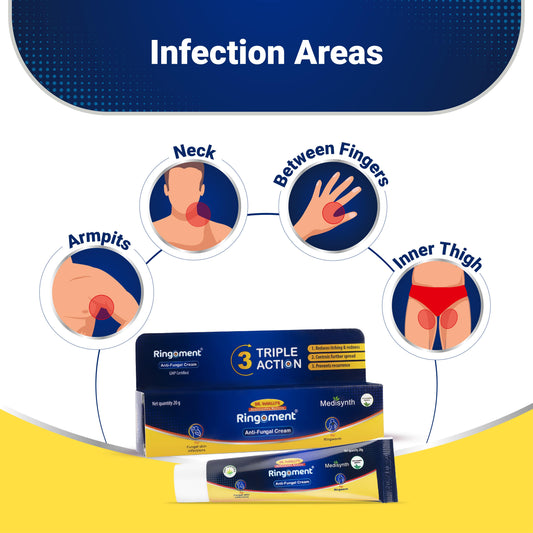
In tropical countries like India, fungal infections such as ringworm (tinea corporis), athlete’s foot (tinea pedis), jock itch (tinea cruris), and fungal infections in skin folds are extremely common.
These infections are caused primarily by dermatophytes, a group of fungi that thrive on keratin present in skin, hair, and nails.
Conventional antifungal creams typically focus on directly killing fungal organisms, but recurrence is common when the underlying skin environment remains favorable for fungal growth.
Homeopathy approaches fungal skin infections differently. A well-formulated homeopathic cream for fungal infection not only addresses microbial imbalance on the skin but also supports tissue repair, reduces inflammation, and helps restore the natural protective function of the skin barrier.
This guide explores how fungal infections develop, what characteristics define a reliable fungal infection homeopathic cream, the scientific rationale behind commonly used homeopathic remedies, and how formulations such as Ringoment antifungal cream support natural skin recovery.
Understanding Fungal Skin Infections and its biology
Fungal infections occur when dermatophytes or yeast organisms colonize the skin's outermost layer, known as the stratum corneum.
These organisms digest keratin and spread across the skin surface, producing symptoms such as:
- Intense itching
- Circular rashes with raised edges
- Scaling or peeling skin
- Redness and inflammation
- Burning or irritation
Fungi thrive particularly well under certain conditions:
1. Warm and humid environments
Moist skin folds create ideal breeding conditions for fungal organisms.
2. Compromised skin barrier
Small cuts, abrasions, and excessive sweating weaken the protective barrier of the skin.
3. Altered skin microbiome
Imbalance in the skin's natural microbial ecosystem can allow fungi to dominate.
4. Repeated reinfection
Sharing clothing, towels, or footwear can reintroduce fungal spores even after treatment.
Because fungal organisms remain confined to the outer skin layers, topical treatments remain one of the most important therapeutic strategies.
However, treatments that only eliminate fungi temporarily may fail to restore the skin’s natural defense system, which is why recurrence is common.
Why Many People Prefer a Homeopathic Antifungal Cream
Homeopathy emphasizes supporting the body's natural healing processes rather than aggressively suppressing symptoms.
A well-formulated homeopathic antifungal cream aims to:
- Reduce fungal overgrowth on the skin
- Soothe inflammation and irritation
- Promote regeneration of damaged skin tissue
- Restore healthy skin barrier function
- Improve resistance to recurrent infection
Unlike strong chemical antifungal agents that may irritate sensitive skin, anti fungal homeopathic ointment formulations are designed to act gently while supporting tissue repair.
This dual action makes them particularly valuable for individuals with recurrent fungal infections or sensitive skin types.
Characteristics of the Best Homeopathic Cream for Fungal Infection
Choosing an effective homeopathic cream for fungal infection requires evaluating several important factors.
1. Multi-remedy formulation
Homeopathy frequently uses combinations of remedies that target different aspects of the condition, including infection, inflammation, and tissue healing.
2. Antifungal and antimicrobial support
Certain botanical remedies used in homeopathy have long histories of supporting skin health and controlling microbial imbalance.
3. Anti-inflammatory action
Reducing itching, redness, and irritation is essential for preventing scratching, which can worsen infection.
4. Skin regeneration support
Repairing damaged skin reduces susceptibility to further infection.
5. Gentle dermatological compatibility
A good homeopathic cream should be suitable for repeated topical application without irritating the skin.
Key Homeopathic Remedies Used in Antifungal Creams
Several remedies traditionally used in homeopathic dermatology are incorporated into fungal infection homeopathic cream formulations.
Each remedy contributes a specific therapeutic function.
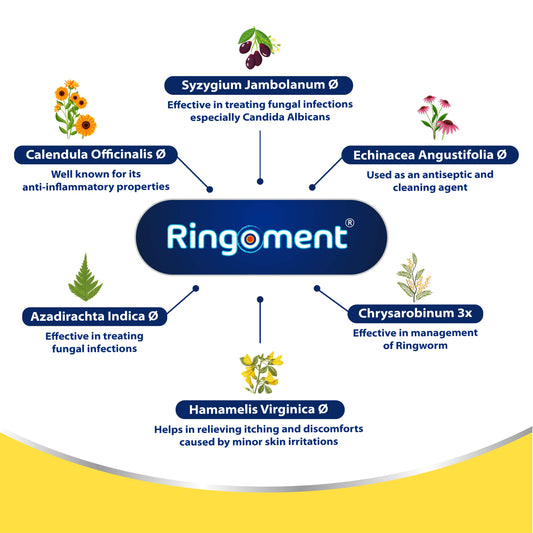
Syzygium Jambolanum
Syzygium Jambolanum is widely known in homeopathy for its role in managing metabolic disturbances and microbial imbalance.
In dermatological formulations, it helps maintain skin integrity and supports microbial balance in infected skin areas.
Its presence helps create an unfavorable environment for fungal overgrowth.
Calendula Officinalis
Calendula is one of the most important remedies for skin healing and tissue repair.
It is traditionally used for:
- inflamed skin
- minor wounds
- irritated or infected tissue
Calendula supports the regeneration of damaged skin cells and helps accelerate healing while reducing inflammation.
Hamamelis Virginica
Hamamelis Virginica, commonly known as witch hazel, possesses soothing and astringent properties.
It helps:
- reduce skin irritation
- calm inflamed tissue
- improve microcirculation in affected areas
This helps reduce itching and redness associated with fungal infections.
Echinacea Angustifolia
Echinacea is associated with strengthening the skin’s natural immune defenses.
It supports local resistance against microbial invasion and promotes healing of infected skin areas.
Azadirachta Indica (Neem)
Neem has been used for centuries in traditional medicine for its antifungal, antibacterial, and anti-inflammatory properties.
It helps:
- control fungal proliferation
- reduce skin irritation
- maintain a healthy microbial balance
Neem plays a central role in many homeopathic antifungal cream formulations.
Chrysarobinum
Chrysarobinum has traditionally been used in homeopathy for persistent skin disorders characterized by scaling, itching, and thickened skin.
It is particularly useful in chronic fungal infections where repeated irritation leads to thickened or discolored patches.
Why Topical Treatment Is Critical in Fungal Infections
Because dermatophytes remain confined to superficial skin layers, topical therapy is the first line of management.
A properly selected homeopathic cream for fungal infection can:
- reduce fungal colonization
- calm inflammation
- prevent the spread of infection
- restore damaged skin tissue
- support long-term skin health
Consistent application ensures the active ingredients remain in contact with infected skin, allowing them to act effectively.
Best Homeopathic Cream for Fungal Infection
Ringoment Antifungal Cream
Ringoment antifungal cream by Medisynth is a carefully formulated homeopathic antifungal cream designed to support skin recovery in fungal infections.
The formulation combines every homeopathic remedy mentioned above, which is traditionally associated with antifungal support and tissue healing.
Ringoment antifungal cream helps:
- reduce itching and irritation
- soothe inflamed skin
- support healing of damaged tissue
- help maintain microbial balance on the skin
- assist in managing fungal infections such as ringworm, athlete’s foot, and jock itch
Because of its gentle formulation, Ringoment anti-fungal homeopathic ointment is suitable for individuals seeking a natural and supportive approach to fungal skin care.
Preventing Recurrence of Fungal Infections
One of the biggest challenges with fungal infections is recurrence. Preventive care is therefore essential.
1. Maintain skin dryness: Fungi thrive in moisture. Drying skin folds properly after bathing reduces the risk.
2. Wear breathable fabrics: Cotton clothing allows better air circulation compared to synthetic fabrics.
3. Avoid sharing personal items: Towels, socks, and clothing can transfer fungal spores, so they should never be shared with others.
4. Maintain foot hygiene: Changing socks regularly and drying shoes helps prevent fungal growth.
5. Support skin immunity: Healthy nutrition, hydration, and balanced lifestyle habits improve the skin’s resistance to infection.
When combined with a suitable fungal infection homeopathic cream, these measures significantly reduce recurrence.
Conclusion
Fungal skin infections are common but often persistent conditions influenced by environmental factors, skin microbiome imbalance, and compromised skin barriers.
A well-selected homeopathic cream for fungal infection offers a gentle yet supportive approach by combining antifungal action with skin healing and inflammation control.
Homeopathic remedies such as Calendula, Neem, Hamamelis, Echinacea, Chrysarobinum, and Syzygium Jambolanum work together to promote skin recovery while maintaining microbial balance.
Homeopathic formulation such as Ringoment antifungal cream brings these remedies together in a balanced topical preparation designed to support healthy skin and help manage fungal infections naturally.
With consistent application and proper hygiene practices, homeopathic topical care can play a valuable role in maintaining healthy, comfortable, and fungus-free skin.
Frequently Asked Questions
1. What is a homeopathic cream for fungal infection?
A homeopathic cream for fungal infection is a topical preparation made with homeopathic remedies that help soothe irritated skin, support healing, and assist in managing fungal growth.
2. How does a fungal infection homeopathic cream work?
A fungal infection homeopathic cream helps reduce itching, calm inflammation, and support the skin’s natural healing while helping maintain microbial balance.
3. What conditions can a homeopathic antifungal cream help?
A homeopathic antifungal cream is commonly used for ringworm, athlete’s foot, jock itch, and other superficial fungal skin infections.
4. Is a homeopathic antifungal cream suitable for sensitive skin?
Most homeopathic antifungal creams are gentle and generally suitable for sensitive skin when used as directed by the physician.
5. How often should an anti-fungal homeopathic ointment be applied?
An anti-fungal homeopathic ointment is usually applied to clean, dry skin on the affected area as advised by a healthcare professional.
6. Can fungal infections return after treatment?
Yes, fungal infections may recur if moisture, poor hygiene, or tight clothing create conditions favorable for fungal growth.
7. What ingredients are commonly used in fungal infection homeopathic cream?
Common remedies include Calendula Officinalis, Azadirachta Indica, Hamamelis Virginica, Echinacea Angustifolia, Chrysarobinum, and Syzygium Jambolanum.
8. What is Ringoment antifungal cream used for?
Ringoment antifungal cream helps soothe itching, reduce irritation, and support skin recovery in fungal infections.
9. Can lifestyle habits affect fungal infections?
Yes. Excess moisture, tight clothing, and poor hygiene can increase the risk of fungal infections.
10. When should someone consult a doctor for a fungal infection?
Medical advice is advised if the infection spreads, persists for weeks, or keeps recurring.
References:
- Preventing Fungal Infections: Tips and Hygiene Practices
- Fungicidal effects of homoeopathic medicines versus allopathic ketoconazole in Candida albicans
- Herbal Antifungal Agents Used for the Treatment of Fungal Infections
- Understanding Fungal Skin Infections
Featured Collection


- Rs. 93.00
-
- Rs. 93.00
- Unit price
- per
- Rs. 93.00
-
- Rs. 93.00
- Unit price
- per


- Rs. 186.00
-
- Rs. 186.00
- Unit price
- per
- Rs. 186.00
-
- Rs. 186.00
- Unit price
- per
- Rs. 206.00
-
- Rs. 206.00
- Unit price
- per
- Rs. 206.00
-
- Rs. 206.00
- Unit price
- per


- Rs. 374.00
-
- Rs. 374.00
- Unit price
- per
- Rs. 374.00
-
- Rs. 374.00
- Unit price
- per
- Rs. 186.00
-
- Rs. 186.00
- Unit price
- per
- Rs. 186.00
-
- Rs. 186.00
- Unit price
- per