


How To Choose a Face Cleanser for Your Skin Type

Choosing the right cleanser is one of the most important parts of maintaining healthy skin. A cleanser does much more than remove dirt from the surface. It affects how the skin feels, reacts, and responds to the rest of the skincare routine.
Using the wrong product can leave the skin excessively dry, irritated, oily, or congested. On the other hand, a well-suited cleanser for the face helps maintain balance, supports the skin barrier, and prepares the skin for better overall care.
The challenge is that different skin types respond differently to cleansing. A cleanser that works well for oily skin may feel too drying for sensitive skin, while a heavy cream-based cleanser may not be suitable for acne-prone skin.
Understanding how cleansers work and how they interact with different skin types makes it easier to build a consistent and effective face cleansing routine.
Why Cleansing Matters in Daily Skincare
Throughout the day, the skin is exposed to oil, sweat, pollution, dust, sunscreen, and other impurities.
If these remain on the skin for long periods, they can clog pores, increase irritation, and affect overall skin texture.
Proper cleansing helps:
• remove surface impurities
• reduce buildup inside pores
• maintain skin freshness
• support healthy-looking skin
• prepare the skin for other skincare products
At the same time, cleansing should not strip the skin completely. Over-cleansing or using harsh formulations can disturb the skin barrier and increase sensitivity.
The goal is balance rather than aggressive cleansing.
Understanding Different Skin Types
Choosing the right face cleanser starts with understanding your skin type. Skin behaves differently depending on oil production, hydration levels, and sensitivity.
1. Oily skin
Oily skin produces excess sebum, which may lead to shine, clogged pores, and acne breakouts.
A cleanser for oily skin should:
• remove excess oil effectively
• help reduce buildup inside pores
• cleanse without over-drying
Harsh products may temporarily reduce oil, but can sometimes trigger even more oil production.
2. Dry skin
Dry skin often feels tight, rough, or uncomfortable after cleansing. It may also appear dull or flaky.
A suitable cleanser should:
• cleanse gently without stripping moisture
• support hydration
• maintain skin comfort after washing
Strong foaming cleansers are often too harsh for dry skin.
3. Combination skin
Combination skin includes both oily and dry areas, usually with oiliness around the forehead, nose, and chin.
A balanced cleanser is important because the skin needs cleansing without making dry areas feel tighter.
4. Sensitive skin
Sensitive skin reacts easily to harsh products, environmental changes, or excessive cleansing.
A good cleanser should:
• feels soothing on the skin
• avoid excessive dryness
• help maintain skin balance
Gentle formulations are usually more suitable for sensitive skin types.
5. Acne-prone skin
Acne-prone skin requires cleansing that helps reduce excess oil and impurities without irritating the skin further.
The best cleanser for acne is usually one that:
• removes excess oil effectively
• supports skin clarity
• cleanses pores gently
• avoids excessive dryness or irritation
Over-cleansing acne-prone skin can worsen sensitivity and inflammation.
Signs You May Be Using the Wrong Cleanser
Sometimes skin problems are not caused by the skin type itself but by the cleanser being used daily.
Common signs include:
- tightness after washing
- excessive dryness or flaking
- increased oiliness shortly after cleansing
- irritation or redness
- recurring breakouts
- dull or uneven skin texture
If these signs appear regularly, it may be time to reassess the cleansing routine.
What Makes a Good Skin Cleanser?
A good cleanser should cleanse the skin effectively while maintaining comfort and balance.
Important qualities include:
- ability to remove impurities without harshness
- support for the natural skin barrier
- compatibility with regular use
- balanced cleansing without over-drying
Texture also matters. Gel cleansers are often preferred for oily or acne-prone skin, while cream-based cleansers may suit dry skin better.
The right formulation should leave the skin feeling fresh rather than stripped.
Importance of a Consistent Face Cleansing Routine
Even the best cleanser gives limited results if used inconsistently.
A balanced face cleansing routine usually includes:
1. Morning cleansing
Morning cleansing helps remove overnight oil buildup and refreshes the skin before starting the day.
2. Evening cleansing
Night cleansing is particularly important because it removes dirt, sweat, sunscreen, pollution, and excess oil accumulated during the day.
3. Avoiding excessive washing
Washing too frequently may damage the skin barrier and increase irritation.
For most people, cleansing twice daily is generally sufficient.
Role of Homeopathic Ingredients in Face Cleansers
Some cleansers include ingredients traditionally associated with skin soothing, clarity, and overall skin balance.
These ingredients are often selected to support:
- skin comfort
- reduction in excess oil buildup
- improved skin appearance
- maintenance of healthy-looking skin
This approach focuses on cleansing while supporting the skin environment.
Key Ingredients Commonly Used in Skin-Supportive Cleansers
1. Berberis Aquifolium
Berberis Aquifolium is commonly associated with improving skin appearance and supporting clearer-looking skin.
It is often used in formulations designed for:
- dull or uneven skin texture
- acne-prone skin
- Pimply dry rough scaly skin
2. Hamamelis Virginica
Hamamelis Virginica is known for its soothing and balancing properties.
It helps support:
- skin comfort
- reduction of inflammation
- cleaner-looking pores
3. Thuja Occidentalis
Thuja Occidentalis is traditionally associated with supporting skin clarity and balance.
It is often considered in formulations for:
- blemish-prone skin
- uneven skin texture
- Oily /greasy skin of face
4. Echinacea Angustifolia
Echinacea is associated with maintaining overall skin health and resilience.
It helps support:
- skin balance
- healthier-looking skin
- protection against environmental stress
5. Curcuma Longa
Curcuma Longa is widely known for its skin-supportive and soothing properties.
It contributes to:
- maintaining skin clarity
- improving overall skin appearance
- supporting irritated skin
6. Hydrastis Canadensis
Hydrastis is associated with maintaining healthy skin texture and cleanliness.
It helps support:
- smoother-looking skin
- skin comfort
- balanced cleansing support
7. Thiosinaminum
Thiosinaminum is traditionally used in skincare formulations intended to support smoother and healthier-looking skin texture.
It is often included in products designed for skin that appears uneven, rough, or affected by recurring blemishes and post-irritation marks.
Best Homeopathic Cleanser for Face
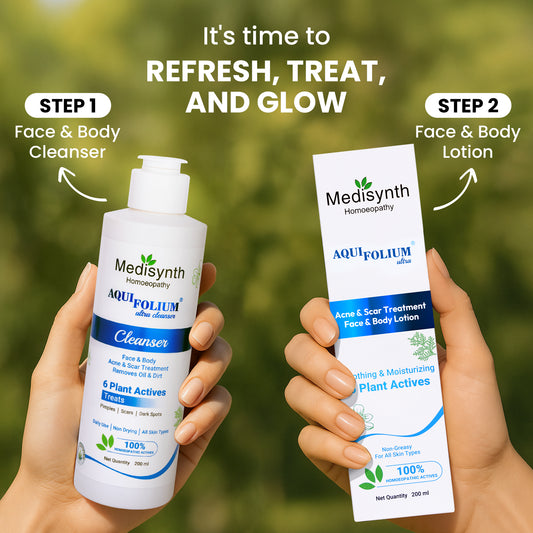
Medisynth Aquifolium Ultra Cleanser
Choosing the right cleanser becomes easier when the formulation supports both cleansing and skin comfort.
Medisynth Aquifolium Ultra Cleanser is designed for regular face cleansing while helping maintain overall skin balance.
The cleanser is formulated in a soothing, non-staining gel base that allows effective cleansing without leaving the skin feeling excessively dry or tight after use.
It is also worth noting that all the key homeopathic remedies mentioned above are included in the formulation of Aquifolium Ultra Cleanser for Face.
Rather than focusing only on surface cleansing, the aquifolium ultra cleanser is designed to support overall skin comfort and appearance.
With regular use, it helps:
- remove daily impurities and excess oil as well as support cleaner-looking pores
- maintain skin freshness
- improve overall skin appearance
- support balanced cleansing without excessive dryness
Because the cleanser is designed for consistent daily use, it fits naturally into both morning and evening skincare routines.
How to Use a Face Cleanser Correctly
Using the right technique is as important as choosing the right product.
Step 1: Wet the face with lukewarm water
Very hot water may irritate or dry the skin.
Step 2: Apply a small amount of cleanser
Massage gently using circular motions rather than scrubbing aggressively.
Step 3: Rinse thoroughly
Ensure no residue remains on the skin.
Step 4: Pat dry gently
Avoid rubbing your face with a towel.
Following these steps helps improve the effectiveness of the cleansing routine.
Conclusion
Choosing the right cleanser for face care plays an important role in maintaining healthy and balanced skin.
Since different skin types respond differently to cleansing, selecting the appropriate formulation is essential for long-term skin comfort and appearance.
A proper face cleansing routine helps remove impurities, reduce excess oil buildup, and maintain overall skin freshness without disrupting the skin's natural barrier.
Products like Medisynth Aquifolium Ultra Cleanser combine cleansing support with skin-friendly ingredients that help maintain balance and comfort during regular use.
With consistent care and the right cleansing approach, maintaining healthier-looking skin becomes more manageable over time.
FAQs
How do I choose the right cleanser for my skin type?
Choose a cleanser based on your skin’s oil levels, sensitivity, and hydration needs.
What is a good skin cleanser?
A good cleanser removes impurities effectively without causing excessive dryness or irritation.
How often should I wash my face?
For most people, cleansing twice daily is generally sufficient.
What is the best cleanser for acne-prone skin?
A cleanser that removes excess oil gently without over-drying the skin is usually preferred.
Can a wrong cleanser damage the skin barrier?
Yes, harsh or unsuitable cleansers may increase dryness and sensitivity over time.
Is gel cleanser good for oily skin?
Gel cleansers are often preferred for oily or acne-prone skin because they cleanse effectively without leaving a heavy residue.
Should a face cleanser leave the skin tight after washing?
No, excessive tightness may indicate over-cleansing or dryness.
References:
- How To Identify Your Skin Type, According To a Dermatologist
- 3 Ways To Know You Are Using The Wrong Cleanser - Garnier
- What’s the Ideal Facial Cleanser for Your Skin Type?
- Let your skin say thank you! The benefits of a consistent skincare routine – indē wild
- Effective Homeopathic Remedies to Complement Skincare Products for Sensitive and Irritated Skin
- How to Use Facial Cleanser: The Complete Step-by-Step Guide
- Boericke’s Materia Medica
Featured Collection


- MRP: ₹ 374.00 (Incl. of all taxes)
-
₹ - MRP: ₹ 374.00 (Incl. of all taxes)
- Unit price
- per
- MRP: ₹ 374.00 (Incl. of all taxes)
-
₹ - MRP: ₹ 374.00 (Incl. of all taxes)
- Unit price
- per


- MRP: ₹ 374.00 (Incl. of all taxes)
-
₹ 0.00 - MRP: ₹ 374.00 (Incl. of all taxes)
- Unit price
- per
- MRP: ₹ 374.00 (Incl. of all taxes)
-
₹ 0.00 - MRP: ₹ 374.00 (Incl. of all taxes)
- Unit price
- per


- MRP: ₹ 418.00 (Incl. of all taxes)
-
₹ - MRP: ₹ 418.00 (Incl. of all taxes)
- Unit price
- per
- MRP: ₹ 418.00 (Incl. of all taxes)
-
₹ - MRP: ₹ 418.00 (Incl. of all taxes)
- Unit price
- per

- MRP: ₹ 748.00 (Incl. of all taxes)
-
₹ 0.00 - MRP: ₹ 748.00 (Incl. of all taxes)
- Unit price
- per
- MRP: ₹ 748.00 (Incl. of all taxes)
-
₹ 0.00 - MRP: ₹ 748.00 (Incl. of all taxes)
- Unit price
- per


- MRP: ₹ 973.00 (Incl. of all taxes)
-
₹ - MRP: ₹ 973.00 (Incl. of all taxes)
- Unit price
- per
- MRP: ₹ 973.00 (Incl. of all taxes)
-
₹ - MRP: ₹ 973.00 (Incl. of all taxes)
- Unit price
- per