


Homeopathic Medicine for Diarrhoea: Why Digestive Problems Increase During Monsoon

Monsoon brings relief from the summer heat, but it also marks the beginning of a season when digestive problems become far more common.
Cases of diarrhoea, food poisoning, stomach infections, and digestive discomfort tend to rise during this time of year.
Most people blame the rain itself, but the real reasons are usually linked to contaminated food, unsafe drinking water, poor food storage, and the rapid growth of bacteria and other microorganisms in humid conditions.
Food that remains safe during cooler months may spoil much faster during monsoon. Street food, improperly stored leftovers, uncovered food, and untreated water become more risky because humidity creates ideal conditions for microbial growth.
As a result, digestive disturbances become one of the most common seasonal health concerns.
For some people, symptoms last only a day or two. For others, repeated episodes of loose stools, abdominal discomfort, vomiting, and weakness can affect work, travel, and daily life.
This is one reason many individuals begin exploring homeopathic medicine for diarrhoea during monsoon, especially when digestive issues become a recurring problem.
Why Does Diarrhoea Increase During Monsoon?
The monsoon season creates conditions that allow bacteria and other harmful microorganisms to spread more easily.
Water contamination becomes more common due to flooding, drainage overflow, and exposure of drinking-water sources to environmental pollutants. Food also tends to spoil more quickly because of increased humidity.
Several factors contribute to the rise in digestive problems during monsoon:
-
Consumption of contaminated water
-
Poor food hygiene
-
Street-food exposure
-
Improper storage of cooked food
-
Increased bacterial growth in humid conditions
-
Consumption of uncooked or poorly washed foods
-
Seasonal changes that affect digestion
Even individuals who generally have a strong digestive system may experience occasional digestive disturbances during monsoon if food or water hygiene is compromised.
Common Symptoms of Diarrhoea
Diarrhoea involves more than simply passing loose stools. Depending on the cause, symptoms may vary from mild digestive discomfort to significant weakness and dehydration.
Common symptoms include:
-
Frequent loose stools
-
Urgent bowel movements
-
Abdominal cramps
-
Bloating
-
Nausea
-
Vomiting
-
Fatigue
-
Loss of appetite
-
Weakness
In many cases, diarrhoea and vomiting occur together, increasing fluid loss and making recovery more challenging.
This is one reason people frequently search for homeopathic medicine for diarrhoea and vomiting during seasonal digestive disturbances.
Why Monsoon Digestive Problems Feel Worse
One reason digestive issues feel more severe during monsoon is because people often underestimate the impact of dehydration.
Every episode of diarrhoea causes the body to lose fluids. When vomiting is also present, fluid loss can become even more significant.
Many people focus on controlling symptoms but pay less attention to replacing lost fluids.
Signs that dehydration may be developing include:
-
Dry mouth
-
Increased thirst
-
Fatigue
-
Dizziness
-
Reduced urination
-
General weakness
This is why digestive disturbances should never be ignored, especially when symptoms continue for several days or involve repeated vomiting.
Tips to prevent Diarrhoea during Monsoons
Many people initially search for home remedies for diarrhoea because they want immediate steps they can take at home.
While severe symptoms require appropriate medical attention, several supportive measures can help during mild digestive disturbances.
1. Stay Hydrated
Fluid replacement is one of the most important aspects of recovery. Water, oral rehydration solutions, and other suitable fluids help replace losses caused by diarrhoea and vomiting.
2. Avoid Heavy Foods
Rich, oily, and spicy foods can place additional stress on an already irritated digestive system.
3. Choose Easily Digestible Meals
Simple foods are often easier to tolerate while digestion returns to normal.
Examples include:
-
Rice
-
Bananas
-
Toast
-
Plain khichdi
-
Light soups
4. Be Careful With Street Food
Monsoon is not the ideal time to take chances with food hygiene. Freshly prepared food is generally safer than food that has been sitting for extended periods.
5. Prioritize Food Hygiene
Properly washing fruits and vegetables, storing food safely, and ensuring access to clean drinking water can help reduce digestive disturbances.
Why Some People Experience Recurring Digestive Problems
Not everyone develops diarrhoea after eating the same food. Some individuals appear more sensitive to digestive disturbances and experience recurring symptoms throughout the monsoon season.
Common contributing factors include:
-
Sensitive digestion
-
Previous digestive issues
-
Frequent consumption of outside food
-
Poor hydration habits
-
Irregular eating schedules
-
Reduced attention to food hygiene
For these individuals, digestive care often becomes an ongoing concern rather than a one-time issue.
Are Diarrhoea and Dysentery the Same Thing?
Although the terms are often mentioned together, diarrhoea and dysentery are not exactly the same condition.
Diarrhoea refers to frequent loose or watery stools and is one of the most common digestive problems seen during monsoon.
It may develop after consuming contaminated food or water, eating spoiled food, or experiencing a digestive infection.
Symptoms typically include loose stools, abdominal discomfort, bloating, and weakness.
Dysentery is a more severe intestinal condition that involves inflammation of the intestines, particularly the colon.
In addition to loose stools, a person may experience abdominal cramps, painful bowel movements, fever, and stools containing mucus or blood.
The difference is important because dysentery generally causes greater irritation to the digestive tract and can leave people feeling significantly weaker than ordinary diarrhoea.
However, both conditions tend to increase during monsoon for many of the same reasons.
Contaminated water, poor food hygiene, bacterial growth, and digestive infections become more common during this season, increasing the likelihood of gastrointestinal disturbances.
Key Ingredients Used in Homeopathic Digestive Formulations
1. Atista Radix
Atista Radix is traditionally included in digestive formulations intended for gastrointestinal disturbances and digestive imbalance. It is commonly used in products developed for digestive comfort and bowel-related concerns.
2. Cynodon Dactylon
Cynodon Dactylon is often included in digestive-support formulations because of its traditional association with maintaining gastrointestinal balance during periods of digestive upset.
3. Hemidesmus Indica
Hemidesmus Indica is frequently used in formulations intended for digestive support and is commonly included in products focused on gastrointestinal health.
4. Holarrhena Antidysenterica
Holarrhena Antidysenterica is one of the most recognized ingredients used in digestive formulations. It has a long history of association with digestive care and is particularly relevant in products intended for diarrhoeal and dysenteric conditions.
5. Terminalia Chebula
Terminalia Chebula has been associated with digestive wellness for generations and is commonly included in formulations intended to support digestive function.
6. Chaparro Amargoso
Chaparro Amargoso is frequently included in digestive-support products designed for gastrointestinal disturbances and recurring digestive discomfort.
What Is the Best Homeopathic Medicine for Diarrhoea?
When digestive disturbances occur repeatedly, many people move beyond temporary dietary adjustments and begin looking for products specifically formulated for diarrhoea and dysentery-related concerns.
The search for the best homeopathic medicine for diarrhoea often centers on formulations designed for broader digestive support rather than focusing on a single symptom.
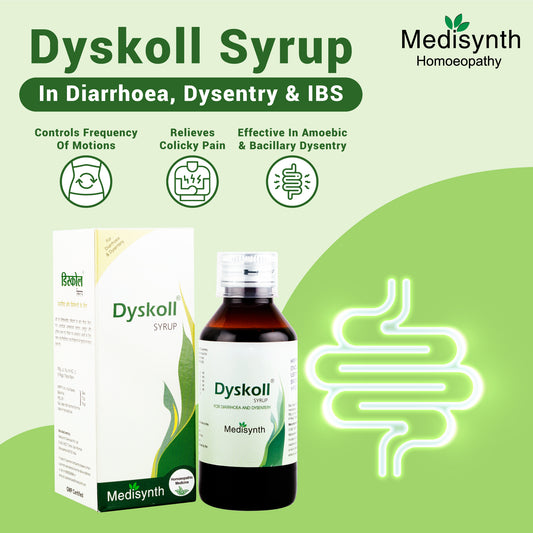
One such formulation is Dyskoll Syrup.
Dyskoll Syrup
Dyskoll Syrup is formulated specifically for digestive disturbances involving diarrhoea and dysentery.
Instead of relying on a single ingredient, the formulation combines multiple ingredients traditionally used in digestive-support products.
Ingredients:
-
Atista Radix
-
Cynodon Dactylon
-
Hemidesmus Indica
-
Holarrhena Antidysenterica
-
Terminalia Chebula
-
Chaparro Amargoso
Why does Dyskoll Syrup work?
Digestive disturbances rarely involve just one symptom. Loose stools may be accompanied by abdominal discomfort, weakness, nausea, loss of appetite, or digestive irritation.
Dyskoll combines ingredients commonly used in digestive formulations rather than focusing on only one aspect of digestive discomfort.
This makes it particularly relevant during monsoon when digestive problems often involve multiple symptoms at the same time.
For individuals looking for diarrhoea homeopathic medicine or homeopathic medicine for diarrhoea and vomiting, a formulation designed specifically for digestive concerns may become part of a broader digestive-care approach.
Conclusion
Monsoon creates conditions that increase the risk of digestive disturbances, making diarrhoea one of the most common seasonal health concerns.
Contaminated food, unsafe water, humidity, and poor food storage all contribute to the rise in digestive problems during this time of year.
For individuals exploring homeopathic medicine for diarrhoea, products such as Dyskoll Syrup are specifically formulated for diarrhoea and dysentery-related digestive concerns and may be considered as part of a broader digestive-care routine during monsoon.
FAQs
1. What is the best homeopathic medicine for diarrhoea?
Formulations such as Medisynth’s Dyskoll Syrup are commonly referenced as the best homeopathic medicine for diarrhoea and dysentery-related digestive disturbances.
2. Why does diarrhoea increase during monsoon?
Monsoon increases the risk of food contamination, unsafe water exposure, and bacterial growth, all of which can contribute to digestive disturbances.
3. What are some supportive measures to avoid diarrhoea during monsoons?
Hydration, simple foods, avoiding oily meals, and maintaining good food hygiene are among the most common supportive measures.
4. Can contaminated water cause diarrhoea?
Yes. Contaminated drinking water is one of the leading causes of diarrhoeal illness during monsoon.
5. Are diarrhoea and dysentery the same thing?
No. Diarrhoea refers to loose or watery stools, while dysentery is a more severe intestinal condition that may involve inflammation, abdominal pain, mucus, or blood in the stools.
6. Why is dehydration a concern during diarrhoea?
Frequent loose stools and vomiting can result in significant fluid loss, increasing the risk of dehydration.
References:
-
Diarrhea (Homeopathy) – Health Information Library | PeaceHealth
-
Why Does Diarrhea Occur During the Monsoon Season? | Siddhanta Superspeciality Hospital Blog
- Boericke’s Materia Medica
Featured Collection


- MRP: ₹ 125.00 (Incl. of all taxes)
-
₹ - MRP: ₹ 125.00 (Incl. of all taxes)
- Unit price
- per
- MRP: ₹ 125.00 (Incl. of all taxes)
-
₹ - MRP: ₹ 125.00 (Incl. of all taxes)
- Unit price
- per

- MRP: ₹ 305.00 (Incl. of all taxes)
-
₹ - MRP: ₹ 305.00 (Incl. of all taxes)
- Unit price
- per
- MRP: ₹ 305.00 (Incl. of all taxes)
-
₹ - MRP: ₹ 305.00 (Incl. of all taxes)
- Unit price
- per
- MRP: ₹ 115.00 (Incl. of all taxes)
-
₹ - MRP: ₹ 115.00 (Incl. of all taxes)
- Unit price
- per
- MRP: ₹ 115.00 (Incl. of all taxes)
-
₹ - MRP: ₹ 115.00 (Incl. of all taxes)
- Unit price
- per

- MRP: ₹ 280.00 (Incl. of all taxes)
-
₹ - MRP: ₹ 280.00 (Incl. of all taxes)
- Unit price
- per
- MRP: ₹ 280.00 (Incl. of all taxes)
-
₹ - MRP: ₹ 280.00 (Incl. of all taxes)
- Unit price
- per